

Table Of Content
- 1. Liquidation Happens When Risk Management Is Missing
- 2. After Liquidation: Do Not Sell Your Spot Coins in a Down Market
- 3. Trade Crypto-to-Crypto Pairs Instead of Crypto-to-USDT
- Your objective changes
- 4. Why Crypto-to-Crypto Trading Works After Liquidation
- 5. Practical Example: Growing Tokens Without Using Stablecoins
- 6. Rules for Crypto-to-Crypto Trading After Liquidation
- 7. The Goal Is Recovery, Not Revenge Trading
- 8. When the Market Recovers, Your Token Count Matters
- Conclusion
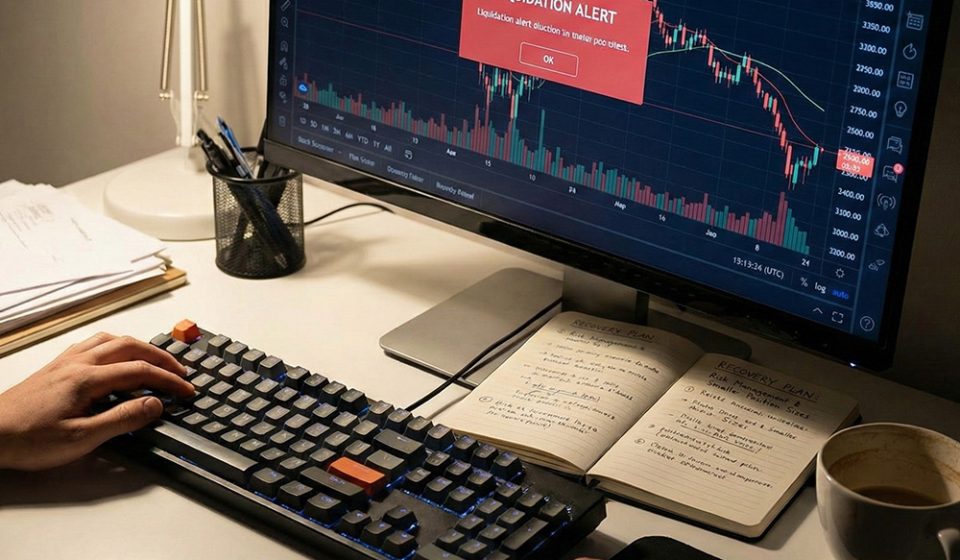
Liquidation is one of the most painful experiences for any trader. It usually happens when risk management rules were not followed, or when a trader did not have a structured strategy at all. Although liquidation is a serious setback, it is not the end of your trading journey. With a disciplined recovery approach, it can become a turning point.
Possibly the best Risk Management strategy is here: RISK AND MONEY MANAGEMENT
This article explains how to move forward when your futures account has been wiped out, you do not want to sell your remaining coins at a loss, and the overall market is down.
The key principle: shift from trading for USDT gains to trading for token accumulation.
1. Liquidation Happens When Risk Management Is Missing
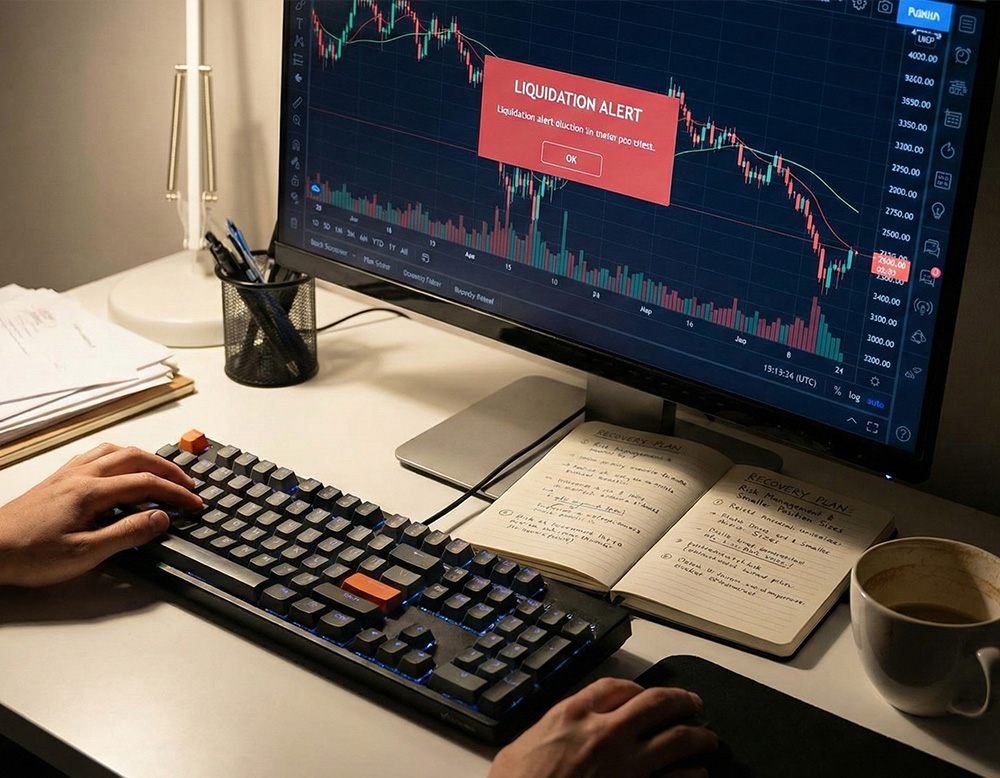
The foundation of sustainable trading is risk management. Without it, liquidation is mathematically guaranteed sooner or later. Traders who do not define risk per trade, who ignore stop-losses, or who attempt to “average down” losing futures positions eventually face a full wipeout.
If you were liquidated, it is not because the market was unfair. Most likely, one or more rules were broken:
• No predefined risk per trade
• No stop-loss or poorly placed stop-loss
• Oversized position
• Averaging down a losing futures position
• Emotional attempts to recover losses
Liquidation is the market’s way of highlighting that your system had no structure and structure is what gives a trader long-term survival.
2. After Liquidation: Do Not Sell Your Spot Coins in a Down Market
After liquidation, many traders feel pressure to rebuild their futures balance immediately. They panic, sell their spot holdings in a red market, and transfer the funds back to the futures account. This is the worst possible reaction.
Why?
• Selling in a downtrend locks in losses permanently
• Futures trading during emotional stress leads to another liquidation
• You lose long-term accumulation potential
• You remove the assets that can appreciate when the market recovers
If you still hold coins on spot, do not rush to sell them below value. There is a smarter approach.
3. Trade Crypto-to-Crypto Pairs Instead of Crypto-to-USDT
When you cannot or do not want to convert your holdings to stablecoins, you can still trade using crypto-crypto pairs such as:
• ETH/BTC
• SOL/BTC
• BNB/ETH
• AVAX/BTC
• MATIC/ETH
• And many others
This type of trading is often called relative strength trading or pair trading.
Your objective changes:
You are no longer trying to grow your USDT balance.
Your goal becomes increasing the number of tokens you hold while the market stabilizes.
For example:
If you hold ETH, you can trade between ETH and BTC to grow your ETH stack without involving USDT.
4. Why Crypto-to-Crypto Trading Works After Liquidation
Instead of fighting the trend or forcing futures trades, you shift to a slow, controlled rebuilding mode. Benefits include:
• No need to sell coins at a loss
• No emotional pressure from futures leverage
• Lower volatility compared to futures
• Opportunity to accumulate more tokens while prices are discounted
• You participate in market movements without adding external capital
This approach is especially effective during sideways or early recovery phases when major coins rotate in strength against one another.
5. Practical Example: Growing Tokens Without Using Stablecoins
Imagine you hold 1 ETH and the market is down.
Selling to USDT would lock in losses. Instead:
- Watch the ETH/BTC pair
- If BTC is stronger, temporarily switch your ETH to BTC
- When ETH shows strength relative to BTC, switch back
- Over cycles, ETH quantity grows
Even small rotations increase your total token count. When the market recovers, the value of your portfolio rises because you hold more units, not just higher prices.
6. Rules for Crypto-to-Crypto Trading After Liquidation
Even here, structure is essential. Use disciplined rules:
• Trade only major assets (BTC, ETH, SOL, BNB).
• Avoid low-liquidity or small-cap tokens.
• Always use clear support/resistance levels.
• Trade on higher timeframes (4H, 1D) for cleaner signals.
• Protect yourself: no leverage, no chasing, no averaging down.
• Take profits consistently when your base asset increases.
This is not the time for high risk. It is a rebuilding phase.
7. The Goal Is Recovery, Not Revenge Trading
The biggest danger after liquidation is the urge to “win everything back quickly.”
This mindset leads directly to:
• New oversized positions
• Impulsive decisions
• More leverage
• Another liquidation
The correct mindset: slow, structured recovery through token accumulation.
Rebuilding is not a sprint. It is a controlled process that prepares you for the next market cycle.
8. When the Market Recovers, Your Token Count Matters
If you manage to accumulate more tokens during the downtrend, then when the market enters a new bullish phase:
• Your portfolio grows faster
• You recover earlier
• You outperform simply holding
• You begin the next cycle with discipline instead of risk
Your goal is to re-enter the futures market only when:
- You have rebuilt enough capital
- You have a written risk management rule set
- You can follow stop-loss discipline
- You trade without emotion or urgency
Until then, crypto-to-crypto trading is your structured bridge to recovery.
Conclusion
Liquidation is not the end – it is the moment a trader becomes aware of the real rules of the market.
If you refuse to sell your coins at a loss in a downtrend, you can continue trading through crypto-crypto pairs and focus on increasing your token quantity instead of your USDT balance.
This approach allows you to rebuild slowly, logically, and safely while avoiding the emotional traps that typically follow liquidation. With patience, discipline, and proper risk management, you position yourself for stronger performance in the next market cycle.